


Lady Chatterley's Lover Book review
- Emilie-Jayne Stephens

- Apr 24, 2025
- 2 min read
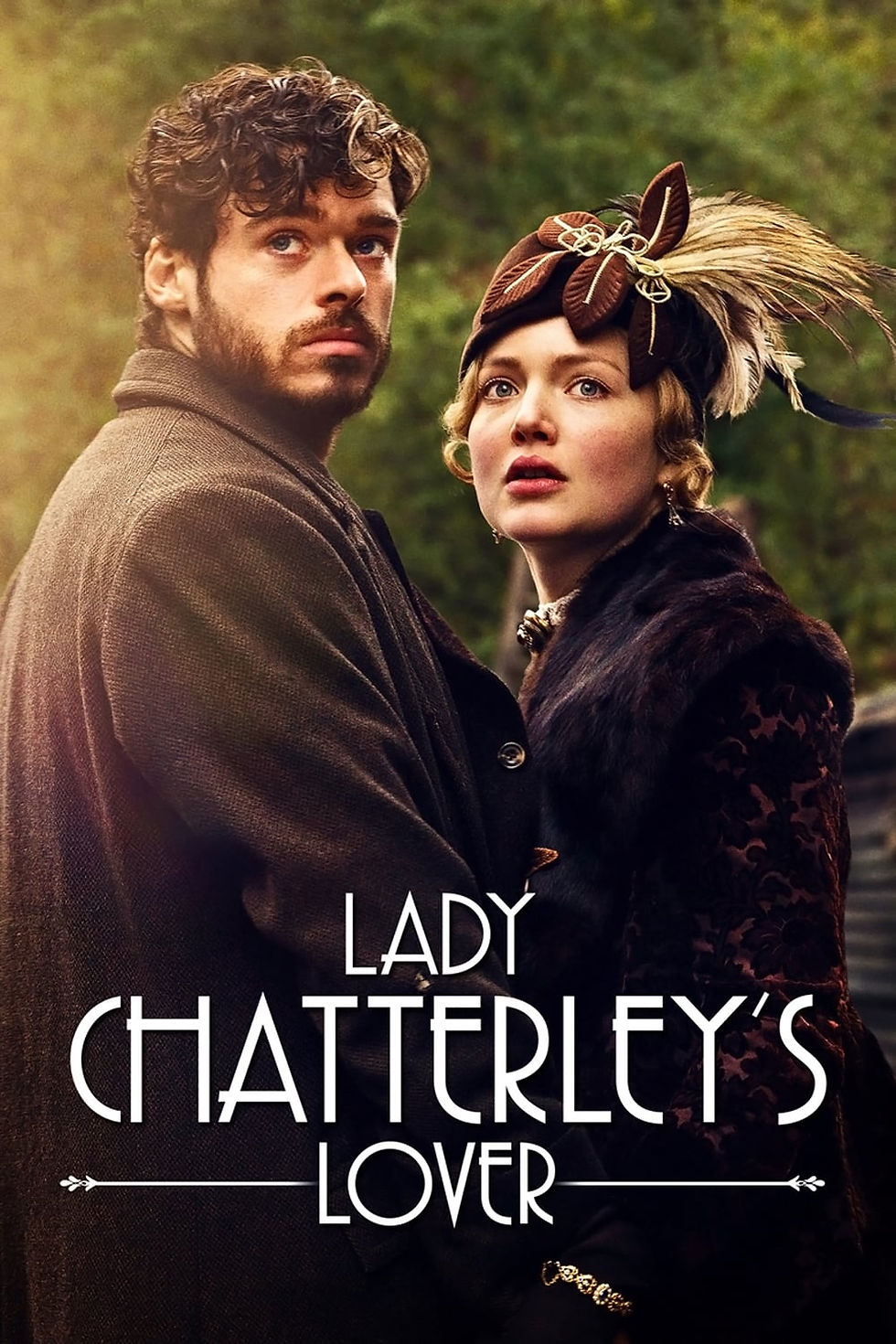
I first watched the film versions of Lady Chatterley’s Lover, my favourite being the one with Holliday Grainger and Richard Madden in. However, I was unaware of the important ideas and themes that the original story by D.H. Lawrence explored. It really delves into many deep ideas about industrialisation versus nature and how this affects people.
Men are described as ‘half-men’ in the book as if their natural ability is being taken out of them by the increasing industrialisation and they are becoming more and more reliant on technology. Which despite the fact that the book was written in the 1920’s, can still be applied to today’s society, especially with advances in things like AI. Lawrence makes it clear that he is against the progression of this technology and fears what will happen to the world in the future if people continue to prioritise worldly objects and man-made wealth over physical connection and nature.
Lawrence’s exploration also covers the decline of history and cultural appreciation, as the past’s beauty is sacrificed - as seen in the pulling down of old buildings - for industrial progress. The shallow desire for money and power over fellow man increasingly surpasses all sentimentality, leaving behind a legacy of lost artistry and architecture. ‘The industrial England blots out the agricultural England.’

Additionally, it is highlighted throughout how society often prioritises appearances over truth, emphasising respectability over authenticity. The necessity of marriage as a societal construct reveals its absurdity. Lawrence brings forth the idea that it is ultimately just an institution that is designed to confine individuals under the guise of respectability. Ultimately, marriage is not about religious significance or true feeling and emotion; it serves as a tool to grant legitimacy to cohabitation and sexual relations.
In conclusion, the book is not just a tale of love and sexuality, as perhaps presented in the film versions, but it is also what I personally think an excellent exploration of human connection, societal constructs, and the enduring and constant struggle for authenticity and natural beauty in a world increasingly defined by industrialisation and materialism.
Comments